

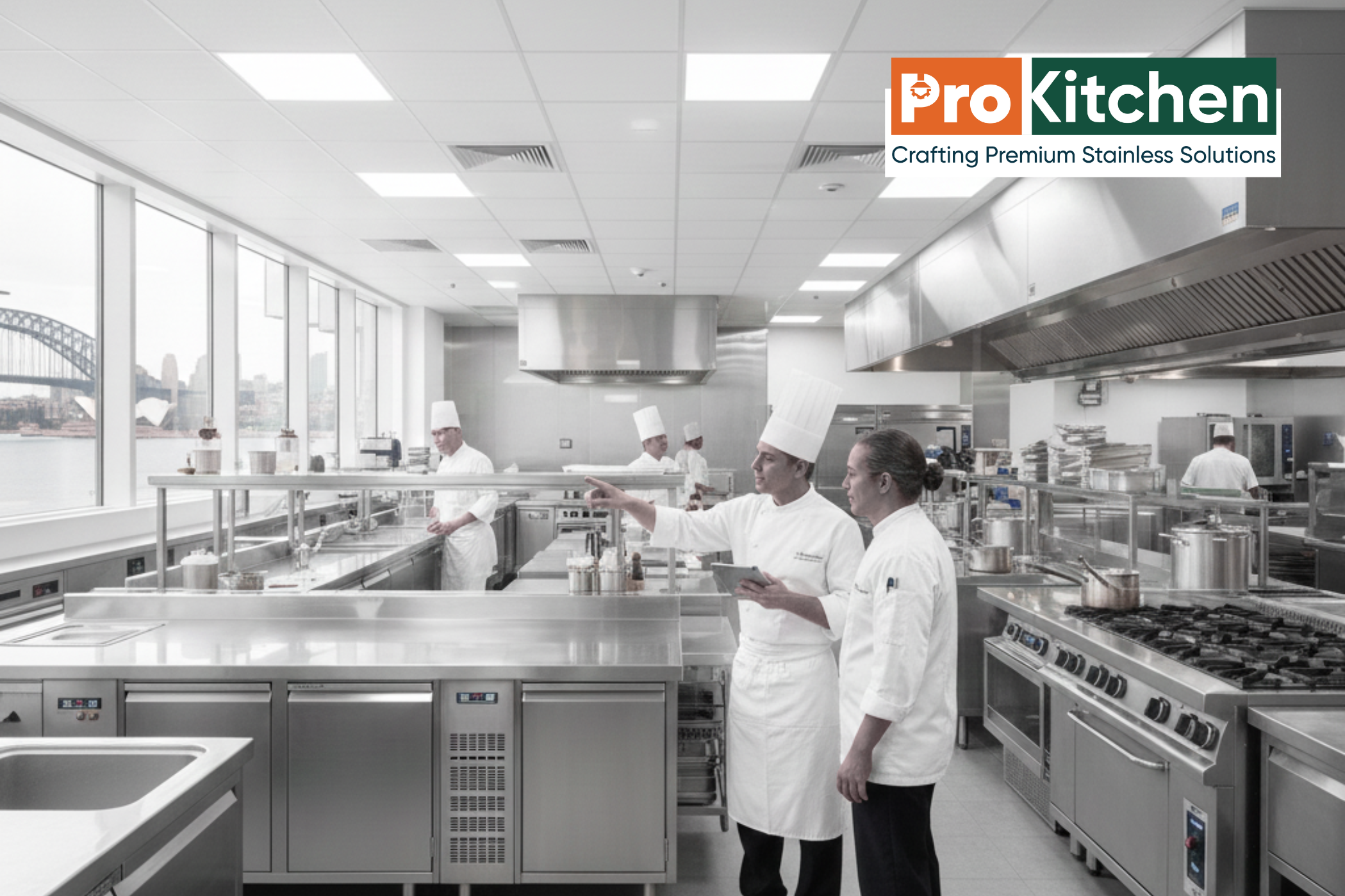
Setting up a commercial kitchen in Australia involves more than selecting high-performance equipment and designing an efficient layout. To operate legally and safely, your kitchen must meet strict council regulations and compliance standards set by local councils and state authorities. Understanding these requirements early can save time, prevent costly delays, and ensure smooth approvals.
Understanding Council Approval for Commercial Kitchens
Every commercial kitchen in Australia must be approved by the local council before operations begin. This approval ensures your kitchen complies with health, safety, and environmental regulations.
Key council requirements typically include:
– Floor plans and kitchen layout approval
– Food preparation and storage zones
– Waste disposal and grease trap installation
– Ventilation and exhaust systems
– Plumbing and drainage compliance
Each council may have slightly different expectations, which is why professional guidance is essential.

Food Safety and Health Compliance Standards
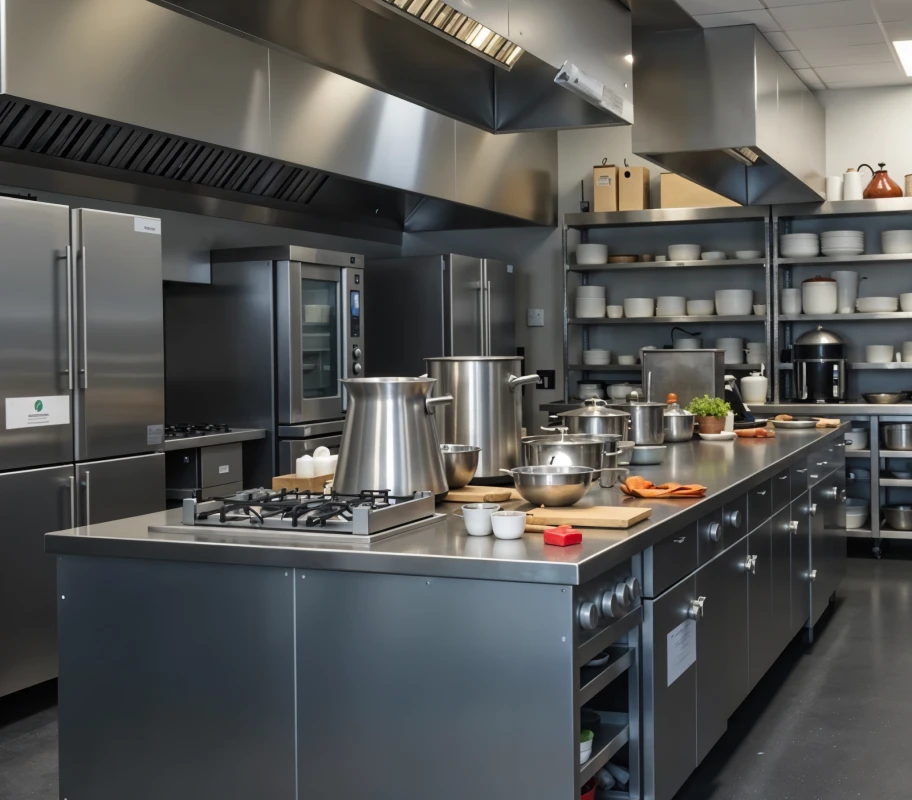
Commercial kitchens must comply with the Food Standards Australia New Zealand (FSANZ) guidelines and state-based food safety regulations. These rules are designed to prevent contamination and ensure food is prepared in a hygienic environment.
Common food safety compliance requirements include:
– Non-porous, easy-to-clean surfaces
– Proper handwashing stations
– Temperature-controlled food storage
– Separation of raw and cooked food areas
– Pest control measures
ProKitchen designs kitchens that align with these standards, helping businesses pass inspections with ease.
Ventilation, Fire Safety, and Mechanical Compliance
Commercial kitchens must meet fire safety and ventilation regulations, especially when using gas or high-heat equipment.
Key compliance elements include:
– Commercial exhaust hoods and ducting
– Fire suppression systems
– Gas compliance certification
– Electrical safety approvals
Incorrect installation can lead to failed inspections or operational shutdowns. Our experienced team ensures all mechanical and safety systems meet Australian standards from day one.
Accessibility and Workplace Safety Requirements
Australian regulations also require commercial kitchens to follow Work Health and Safety (WHS) and accessibility guidelines. This includes:
– Safe equipment placement
– Slip-resistant flooring
– Adequate workspace clearance
– Staff safety and emergency access
A compliant kitchen is not only legally approved, it’s safer, more efficient, and easier to operate.
Why Professional Compliance Support Matters
Navigating council approvals and compliance requirements can be complex, especially for new hospitality businesses.
Working with professionals ensures:
– Faster council approvals
– Reduced risk of costly redesigns
– Full legal compliance
– Long-term operational efficiency
At ProKitchen, we specialize in commercial kitchen installations, custom layouts, and council-approved designs tailored to Australian regulations. From your first inquiry to final installation, we provide clear guidance and industry expertise every step of the way.
Build a Compliant, High-Performance Kitchen with Confidence
A successful commercial kitchen starts with the right foundation, compliance, precision, and performance. Whether you’re opening a restaurant, café, or commercial food space, ProKitchen is here to help you meet council requirements while creating a kitchen that works as hard as you do.
Leave a Reply